
Start with the details
Review the reported behavior and look for visible under-sink moisture, damaged or loose-looking drain connections, and signs of a drainage backup.
Kitchen disposal and under-sink help
Evaluation requests for disposals that hum, stop, leak, drain slowly, back up, or may need replacement.
$49 service call • Repair price provided before work
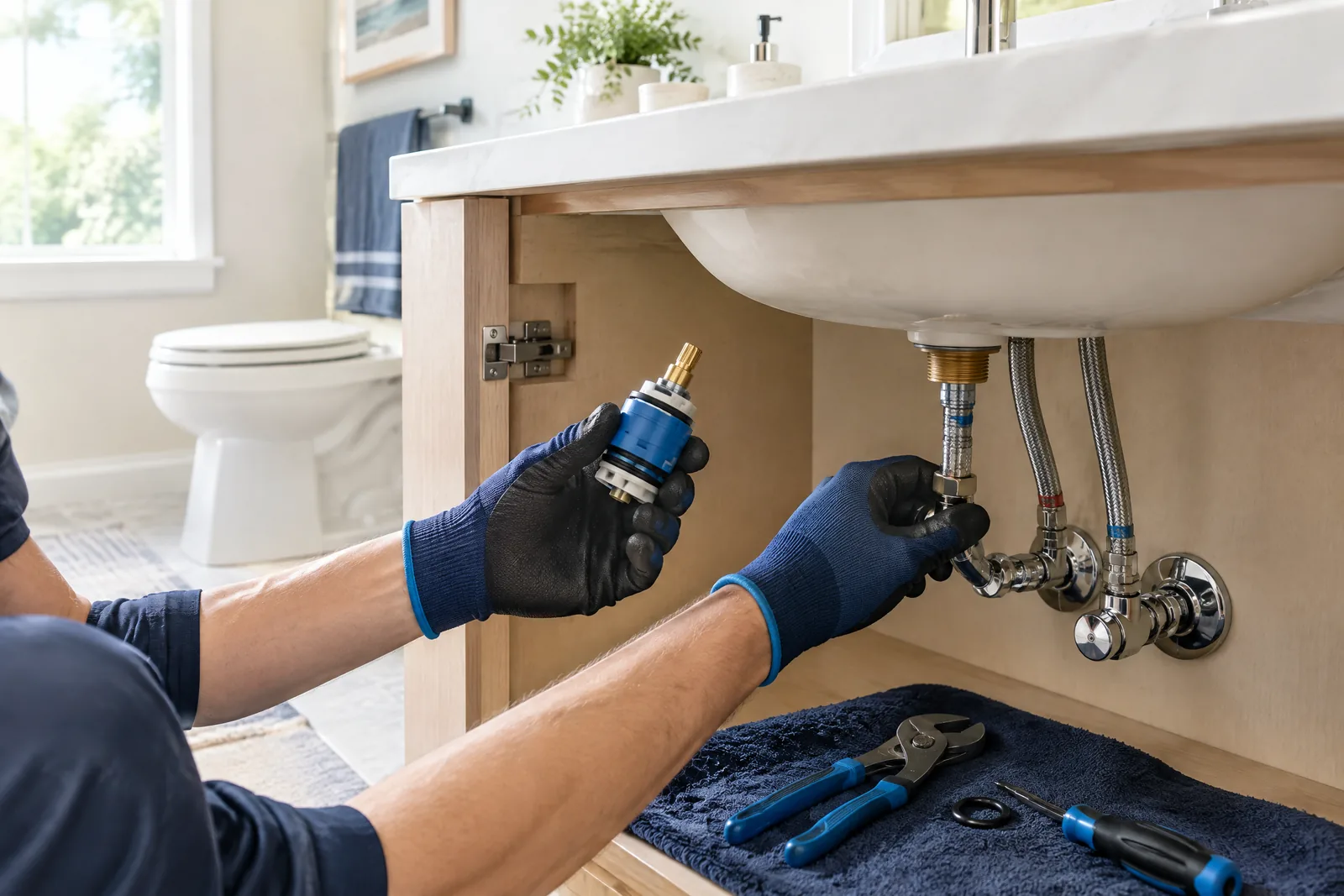
What may be evaluated
Review the reported behavior and look for visible under-sink moisture, damaged or loose-looking drain connections, and signs of a drainage backup.
Identify the disposal make/model when visible, its mounting and discharge arrangement, and whether a dishwasher connects to the system.
Assess the reported sink-drain performance in context; a humming unit, a stopped unit, and a sink backup can have different contributing conditions.
Consider the existing sink, drain, trap, dishwasher connection, power arrangement, and accessible space as relevant to the requested work.
Prepare the request
Do not take a photo or gather information if doing so would put you near water, sewage, gas, electricity, traffic, or another unsafe condition.
What to expect
The $49 service call covers the visit and evaluation. Any repair price is presented separately for approval.
Share the address, symptoms, and urgency.
The plumber evaluates the issue and explains what was found.
Choose whether to proceed after reviewing the proposed scope and price.
Clear answers
Need help with a specific situation? Call or text and describe what is happening.
(469) 734-0431A hum can occur when a disposal is obstructed or has stopped rotating, but the symptom alone does not establish the cause. Turn the switch off and keep hands out of the unit. If it is safe to do so, follow the specific manufacturer instructions for that model or arrange an evaluation; do not continue running a humming unit.
First, turn the disposal switch off. The unit may have an overload protector, a jam, a switch or circuit issue, or another condition. The manufacturer’s instructions for the exact model are the safest reference for any reset procedure. If the unit still will not operate, provide the model and symptoms when requesting service rather than repeatedly trying it.
North Texas Municipal Water District and the Texas Commission on Environmental Quality advise keeping fats, oils, grease, and food scraps out of kitchen drains; grinding does not eliminate grease and can contribute to pipe or sewer blockages. Scrape plates and pans into the trash or compost where available, and use local guidance for cooking-oil disposal.
No. Moisture under a kitchen sink can originate at the disposal body, mounting area, drain connection, dishwasher connection, faucet, supply lines, or another component. An evaluation can help identify the visible source and discuss suitable options, but replacement should not be assumed from a leak report alone.
It depends on the existing sink, drain, trap, dishwasher arrangement, electrical setup, accessible space, product instructions, and any locally applicable requirements. Share photos and the property address so the request can be reviewed; no installation, code, or permit outcome should be presumed before the conditions are evaluated.
Related decisions
Planning and safety sources
These resources support general safety and planning information. They do not diagnose the property or replace the authority responsible for the specific address.
Get a clear next step
Send the address and what is happening. Standard residential service call: $49.